
OUR SERVICES
Basement Waterproofing Services in Tiffin, OH
Keeping your Tiffin basement dry requires choosing the right approach for your specific foundation type and water source, along with transparent pricing for every option. The correct repair method hinges entirely on how your home was built and where the moisture enters, because these situations demand distinct solutions. A saturated masonry wall needs completely different treatment than groundwater forcing its way up through a concrete floor. Browse our primary services below to find the one that fits your situation, or reach out to (419) 406-4560 for direct guidance on the best path forward.
Interior Drainage & Sump Pumps
We install proper drain tile beneath your concrete floor within a bed of clean gravel, directing water to a secure sump basin equipped with a sealed cover and proper discharge lines. This method serves as the definitive solution for hydrostatic pressure forcing moisture up through your slab or entering at the cove joint. While frequently pitched as a universal fix by others, a genuine installation requires excavation rather than simply adhering a plastic track to your floor, which fails to handle the seasonal groundwater levels common near the Sandusky River.
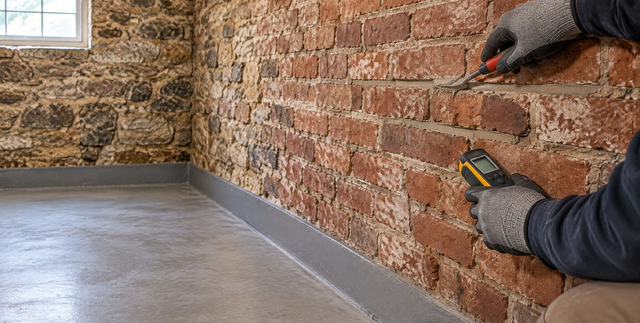
Masonry Foundation & Wall Repair
Our local housing stock features a diverse mix of historic brick, stone, traditional block, and poured concrete foundations that require specialized knowledge to maintain. Over decades, mortar joints naturally break down and allow moisture to penetrate, effectively trapping water within the wall structure itself. Our crews carefully restore these compromised joints, stabilize the underlying structural integrity, and resolve the external factors driving moisture against your home. Simply injecting epoxy into visible cracks rarely solves the underlying problem for these older materials.
Exterior Waterproofing & French Drains
This comprehensive process involves digging down to your foundation footer, sealing the exterior wall with a waterproof membrane, laying perforated pipe in clean stone, and replacing the soil with proper drainage material. While requiring the largest investment, it provides the most durable protection available, and for certain properties in Seneca County, it represents the only viable method to stop persistent infiltration. Our team will always provide an honest assessment and let you know if a less invasive approach would suffice.
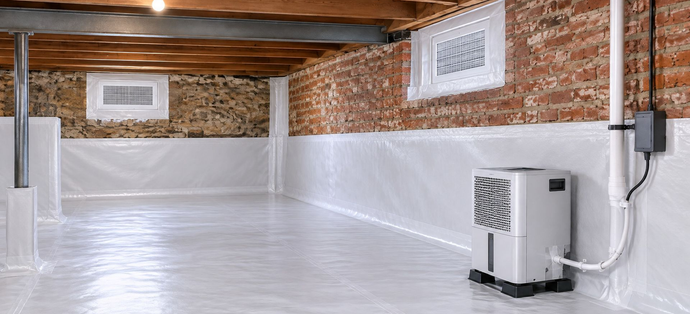
Crawl Space Encapsulation
We deploy a thick, durable moisture barrier covering both the earth floor and foundation walls, securing it firmly at the top edge and sealing every overlap, paired with an appropriately sized dehumidification unit. Leaving bare dirt exposed under your home allows constant ground moisture to rise into your living spaces above. Simply tossing a thin layer of loose plastic over the soil does not provide adequate protection against this continuous upward vapor drive.
Basement Waterproofing Cost
We believe in sharing practical planning estimates for all our services directly on this website, complete with detailed explanations of what drives those numbers. While other contractors in our area hide their pricing until they arrive at your home, we prefer complete transparency from the beginning. Homeowners deserve the ability to calculate a realistic budget for their project before committing to an initial consultation.
SIGNS TO WATCH FOR
When you need basement waterproofing in Tiffin
While pooling water is impossible to ignore, your home typically provides several early indicators of moisture intrusion before major flooding occurs. A powdery white mineral deposit appearing on your block or brick surfaces indicates that moisture is traveling through the material and evaporating inside. Finding a dark, damp band along the bottom of your walls after storms suggests the foundation is actively drawing up groundwater. Diagonal cracks tracing through mortar lines clearly point to structural stress from outside soil pressure pushing against the masonry. Experiencing persistent damp odors during summer months frequently traces back to an unprotected dirt crawl space rather than your main basement. Furthermore, if your sump system runs non-stop during spring thaws, it means the local water table has risen higher than your foundation slab.
Get Your Free Quote
No obligation. No pressure. We reply within one business day.
ROOT CAUSES
Why basements take water in Tiffin and Seneca County
The unique waterproofing needs in our community stem from our location as an established settlement built along a major waterway. With the Sandusky River flowing right through town, fluctuations in the river stage have an immediate impact on surrounding groundwater elevations. Elevated river levels force the local water table upward, creating intense hydrostatic pressure against residential floors and deep walls. Our varied historic housing stock complicates this further, as countless properties rely on aging brick, natural stone, or vintage block foundations that lack modern waterproofing protections. As their mortar degrades over time, these structures become highly susceptible to both elevated seasonal groundwater and heavy rain runoff. Because of this interaction between fluctuating river levels and diverse historic materials, correctly identifying your specific foundation type and how moisture travels is absolutely essential prior to recommending any solution.
BUDGETING
What affects the cost of waterproofing a Tiffin basement
The total length of the required repair area serves as the primary driver for your final bill, as internal systems are calculated by the linear foot, meaning targeted repairs cost significantly less than whole-house installations. Accessibility represents the next major variable in the calculation. Properties featuring clear, unobstructed yards allow for efficient work, whereas obstacles like custom patios, established gardens, or paved driveways blocking the work zone increase labor costs and can occasionally make digging impossible. The specific construction of your home plays a crucial role locally, since historic brick and stone structures demand entirely different restoration approaches compared to modern poured walls. For outside digging, the depth of your footer dictates the price, as deeper trenches require moving substantially more earth. Additional baseline expenses include municipal permit verification, the mechanical pumping equipment, and ensuring the discharge line meets all local code requirements. We provide transparent planning figures online so you can review the financial aspects on your own schedule.
DECISION GUIDE
Interior or exterior — how to decide
The fundamental difference between these approaches is that internal systems control moisture after it enters, while external methods block it entirely, and the correct choice relies strictly on identifying the source of your leak. When moisture pushes upward through your concrete floor or enters exactly where the floor meets the wall, especially during spring thaws, you are facing elevated groundwater that requires an internal pressure relief system. Conversely, if you observe water trickling down your walls during intense storms, entering through degraded mortar or high cracks, you are dealing with surface runoff that must be addressed from the outside through improved grading, extended downspouts, or full excavation. The most complex scenarios involve our local historic brick or block foundations suffering from both groundwater pressure and surface infiltration simultaneously. These complicated cases occasionally require a combined approach, and any professional offering a definitive answer without a thorough evaluation is simply speculating.
WHY US
Why choose our team for your basement
Numerous franchise operations bidding on projects in our area actually travel from distant metro areas like Toledo or Columbus. These representatives typically show up determined to push a specific product package rather than taking the time to evaluate your unique structural needs, which proves problematic in a riverfront community defined by varied historic construction methods. This lack of tailored assessment inevitably impacts both your final invoice and the long-term success of the repair.
- Comprehensive evaluations focused specifically on historic brick, stone, and traditional block structures
- Firm written proposals based entirely on physical inspections rather than inaccurate remote guessing
- Straightforward advice detailing whether internal control or external prevention fits your situation best
- Detailed explanations covering local discharge regulations and important structural safety factors
GOOD TO KNOW
Frequently Asked Questions
Which service do I actually need?
Begin by observing exactly where the moisture first enters your home. Puddles forming up through the concrete or seeping in at the lower seam indicate a need for internal pressure relief. Moisture trailing down the walls during severe downpours suggests external issues, often resolved by simply correcting the soil slope and extending your gutters. Experiencing damp air and unpleasant odors without obvious puddles typically points toward an unprotected dirt crawl space. Historic brick or block showing white mineral blooms and diagonal fractures requires professional mortar restoration regardless of other treatments. Should your property exhibit multiple symptoms, a combined approach might be necessary, which is exactly why we offer complimentary evaluations.
Is interior drainage a real fix or just managing the problem?
Internal systems control the moisture, which represents the most sound technical approach for many local properties rather than a simple stopgap measure. Since altering the natural groundwater elevation near the river is impossible, the best strategy involves providing a dedicated escape route to prevent pressure from threatening your foundation. The critical factor is ensuring the piping is properly buried beneath the concrete within clean stone, rather than settling for a superficial plastic track adhered to the surface.
Why can't you just quote over the phone?
Similar signs of moisture can stem from entirely different sources that vary wildly in repair costs. A wet corner might result from elevated groundwater, a saturated historic brick structure, or simply a gutter emptying too close to your house. These scenarios require a full internal system, specialized mortar restoration, or a ten-dollar extension pipe, respectively. Attempting to price these issues without a physical visit guarantees either an inflated bill or an unexpected price hike once the work begins.
How is the discharge handled?
Proper water routing and regulatory compliance must be verified with local officials and clearly documented in your project proposal before any digging starts. The specific rules change significantly based on whether your property falls within city boundaries or out in the broader county, as well as the exact nature of the mechanical or structural modifications involved.
How long does the work take?
Targeted internal systems along a single section typically finish within forty-eight hours, while whole-house installations require up to three days. Restoring historic mortar depends entirely on the current deterioration level, whereas sealing a dirt foundation area generally takes one to two days. Digging out an external trench remains the most time-consuming option, requiring roughly three to five days based on the required depth and yard accessibility.
Not sure which one you need?
Most homeowners begin exactly there. Our complimentary physical evaluation will identify the precise source of your moisture, determine the appropriate repair method, and provide a firm written price without any pressure to commit.
