
BASEMENT WATERPROOFING · TIFFIN, OH
Masonry Foundation & Wall Repair in Tiffin, OH
A significant portion of older homes in Tiffin feature diverse masonry foundations, including brick, fieldstone, early concrete block, and poured walls. Due to the city's compact layout along the river, local basements are directly influenced by the Sandusky River stage and shifting seasonal groundwater tables. Over time, moisture infiltrates through deteriorating mortar joints and the seam where the wall meets the floor, leading to persistent dampness and structural degradation. We carefully evaluate the exact foundation material and trace the water's path before suggesting a specific intervention. Whether the situation calls for repointing eroded mortar, controlling high groundwater with an interior drainage setup, or resolving outside water accumulation, we implement the correct strategy for your home. Reach out at (419) 406-4560 to schedule a complimentary on-site evaluation.
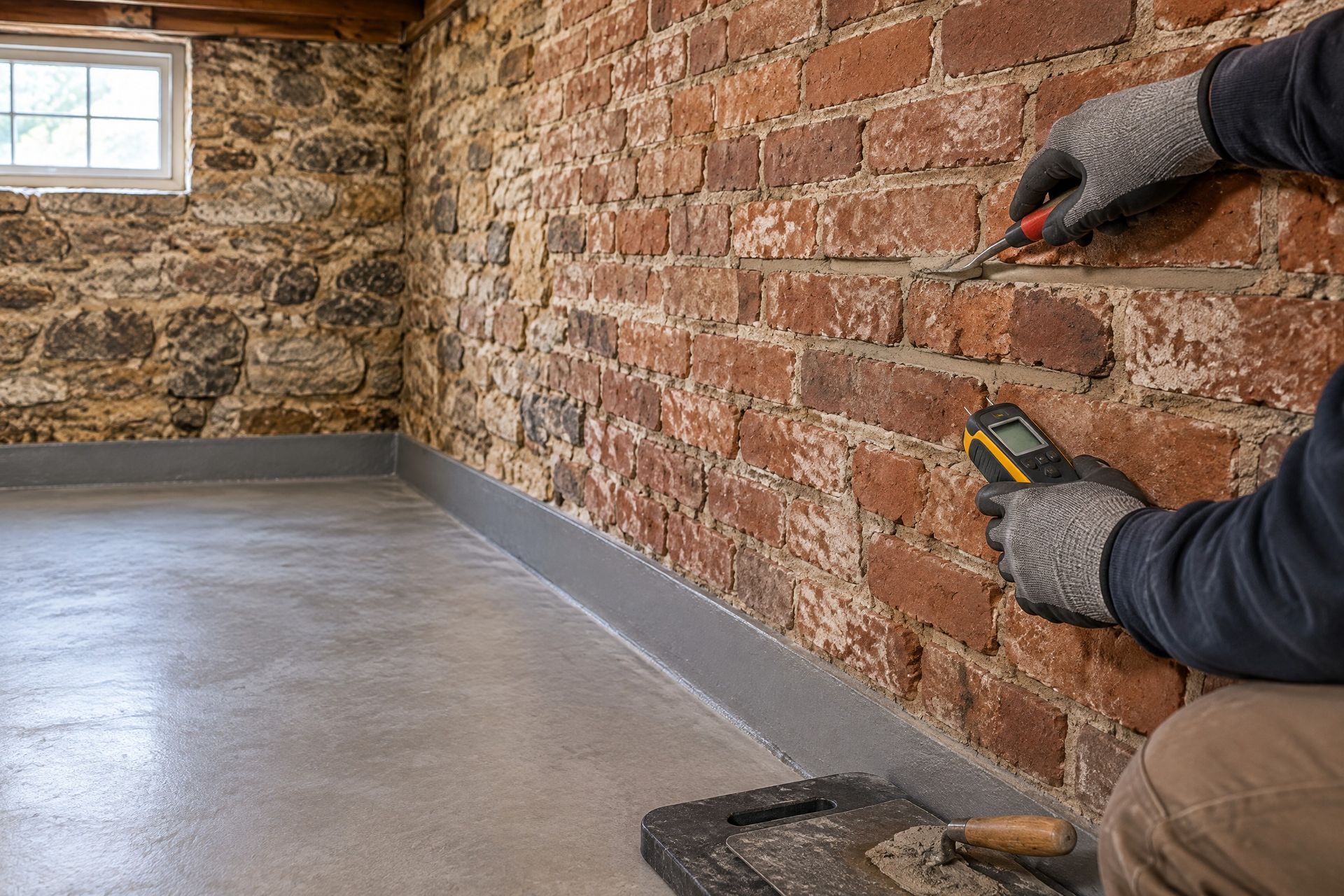
What masonry foundation repair involves
Our approach starts with pinpointing the specific type of masonry and locating the exact points of water entry. For aging brick, stone, or block walls, the mortar joints frequently represent the most vulnerable areas. We meticulously remove crumbling or degraded mortar until we reach a solid base, then repoint those joints using an appropriate mortar blend. Applying an incorrect mortar to historic brick or softer stone can lead to severe damage to the masonry units, making precise material matching essential. We shape and finish the fresh joints to effectively repel moisture and rebuild the structural strength of the wall.
In addition to repairing the masonry, we tackle the underlying water issue. When fluctuating groundwater or pressure from the river stage forces moisture upward through the floor-to-wall connection, we alleviate that hydrostatic stress using a dedicated interior drain tile and a fully sealed sump pump setup. If moisture is penetrating higher on the wall, we examine the exterior conditions. Waterlogged soil resulting from inadequate grading, missing downspout extensions, or poor yard drainage exerts tremendous force against older masonry structures. An effective repair strategy must restore the joints, control internal hydrostatic pressure, and resolve external water accumulation.
When you need masonry wall repair: signs and situations
Watch for these frequent indicators of moisture damage in Tiffin's older brick, stone, and block basements.
- Mortar joints that appear powdery, deeply worn away, or can be easily dislodged
- Diagonal stair-step fractures tracking along the mortar lines in block or brick walls
- Chalk-like white mineral residue blooming across the interior surface of the masonry
- Moisture penetrating the seam where the foundation wall intersects the concrete floor
- Wet areas on the foundation that emerge following heavy rainfall or elevated river levels
- Noticeable inward deflection or bulging affecting a specific section of the basement wall
Get Your Free Quote
Why masonry foundations fail in Tiffin
Because Tiffin developed as a tightly knit community along the Sandusky River, local residences reflect more than a century of varying construction techniques. A large number of these houses rest on foundations constructed well before contemporary waterproofing practices were established, utilizing brick, fieldstone, early block, or early poured concrete. As decades pass, the original lime-based mortar in these structures degrades, loses its adhesive properties, and slowly washes away. This ongoing deterioration diminishes the wall's capacity to withstand moisture infiltration and soil weight, opening distinct routes for water to penetrate the basement environment.
The unique local geography significantly accelerates this structural wear. With the Sandusky River flowing directly through Tiffin, varying river stages and shifting seasonal groundwater tables place substantial hydrostatic stress on basement walls and concrete floors. Whenever the surrounding earth becomes saturated, water forcefully presses against the foundation structure. If the yard slopes downward toward the residence, surface runoff compounds this heavy burden. For mixed masonry foundations, this intense combination of outside water pressure and decaying mortar results in moisture seepage, inward bowing, and overall structural fatigue. A thorough evaluation must analyze both the state of the masonry and the behavior of the surrounding water.
What affects the cost of masonry repair in Tiffin
Pricing depends on the required masonry restoration and drainage improvements. View our cost page for planning ranges.
- The total linear footage of deteriorated mortar joints requiring removal and professional repointing
- The specific variety of masonry present and the complexity of matching the original mortar
- Whether intense hydrostatic pressure dictates the installation of interior drain tile and a sump pump
- If the foundation wall exhibits bowing, necessitating specialized structural stabilization or reinforcement
- The scope of exterior modifications required, including landscape regrading or extending downspouts outward
- The ease of accessing damaged sections, which may involve dismantling finished basement interiors
Repair or rebuild the masonry wall
A large percentage of older masonry walls showing severe surface wear can be effectively restored without undergoing a complete reconstruction. When the main problems are degraded mortar, general dampness, or diagonal cracking that has not led to major structural shifting, repointing the joints and controlling the water pressure usually resolves the issue. By renewing the mortar and alleviating hydrostatic stress through adequate drainage solutions, we can significantly prolong the lifespan of the original foundation. Our primary goal is always to salvage the existing masonry whenever it remains structurally viable.
Conversely, if a masonry wall displays extreme inward deflection, major horizontal shifting, or widespread structural collapse, basic cosmetic repointing will not solve the problem. A foundation that is actively displacing due to heavy soil pressure demands robust structural reinforcement. Based on the specific wall material and the severity of the shifting, the solution may require specialized bracing systems, or in the most severe instances, excavating the exterior to rebuild a compromised section. We evaluate structural stability with complete transparency, and we will advise you immediately if your situation requires an independent structural engineer rather than standard masonry repair.
Our step-by-step repair process
STEP 1
Conduct an on-site evaluation to determine the masonry type, inspect for structural shifting, and locate moisture entry points
STEP 2
Analyze how seasonal groundwater fluctuations and the river stage impact the overall water burden on the foundation
STEP 3
Deliver a detailed, fixed-price proposal covering all necessary masonry restoration and drainage system improvements
STEP 4
Verify the permitted discharge location and permit obligations with local officials, documenting them clearly before initiating work
STEP 5
Meticulously extract compromised mortar joints down to a solid base without causing harm to the surrounding masonry units
STEP 6
Repoint the prepared joints using a properly matched mortar blend, shaping it to effectively restore the exterior surface
STEP 7
Implement necessary interior or exterior drainage solutions to permanently alleviate continuous hydrostatic water pressure
STEP 8
Execute required exterior adjustments such as regrading and extending downspouts, concluding with a comprehensive final inspection
Timeline and what to expect
The duration of a masonry foundation repair project relies entirely on the overall scope of the required work. Restoring a damaged section of brick or block through repointing generally takes between one and three days. This process requires exceptional attention to detail; degraded mortar must be extracted precisely, and the fresh application requires adequate time to cure. Should the plan involve fitting an interior drain tile system to control groundwater intrusion, expect the timeline to increase by a few days. Exterior digging or significant regrading tasks are subject to weather conditions and will extend the schedule further. We provide a transparent schedule before starting and execute the work efficiently to reduce any inconvenience.
GOOD TO KNOW
FAQs
Can I just paint over my damp brick or stone walls to stop the water?
No, applying waterproofing paint or surface coatings actually locks moisture inside the masonry structure. For older brick or stone foundations, this confined moisture speeds up the breakdown of both the mortar and the masonry units themselves. The moisture continues to penetrate the wall from the soil outside; it simply loses the ability to evaporate on the interior face. The appropriate method is to halt the water at its origin, alleviate the hydrostatic stress, and restore the compromised joints so the foundation can dry naturally.
Why is the mortar crumbling on my basement walls?
Mortar naturally degrades over decades due to simple aging, continuous moisture exposure, and the inevitable shifting of the surrounding earth. For many of Tiffin's older residences, the original mortar mixtures are considerably softer than contemporary alternatives. When elevated groundwater or surface drainage repeatedly saturates the foundation, it dissolves the binding agents within the mortar, resulting in a powdery and recessed appearance. Professional repointing replaces this missing material and successfully renews the structural integrity of the wall.
Does a high river stage mean my basement will definitely flood?
Not necessarily. Although the stage of the Sandusky River directly influences the local water table, whether your particular basement experiences seepage depends on the health of your foundation, its elevation, and your current drainage setup. High groundwater creates intense hydrostatic pressure against basement walls and floors. Provided your masonry remains solid and you maintain a functioning sump pump and drainage system, your basement can stay completely dry even during elevated river conditions. We evaluate every property individually to determine its unique exposure and necessary drainage upgrades.
Is crack injection a good fix for my foundation?
Crack injection techniques are generally successful only for solid poured concrete foundations. This method is entirely inappropriate for repairing brick, stone, or concrete block walls. Within masonry structures, moisture travels through the porous mortar joints or the empty cavities of the blocks, rather than exclusively through distinct cracks. Forcing epoxy into a visible fracture on a masonry wall merely redirects the moisture to find a different route through the adjacent mortar. True masonry repair demands professional repointing and comprehensive drainage solutions, not simple injection.
Will fixing the mortar stop my basement from leaking?
While repointing successfully restores the exterior surface and seals visible voids, it almost never eliminates a basement leak independently if there is ongoing hydrostatic pressure. Whenever groundwater forcefully pushes against the foundation structure, it will inevitably discover an alternative entry point. A permanent resolution typically demands a strategic combination of repointing the masonry surfaces, controlling the groundwater utilizing interior or exterior drainage systems, and resolving outdoor surface water problems like inadequate grading or undersized downspouts.
Get a clear diagnosis for your masonry foundation
Complimentary on-site evaluations are available throughout Tiffin and Seneca County. We analyze your exact foundation material, inspect for any structural shifting, and deliver a detailed fixed-price proposal for the appropriate solution.